
In brief
What Experience does in Atom.
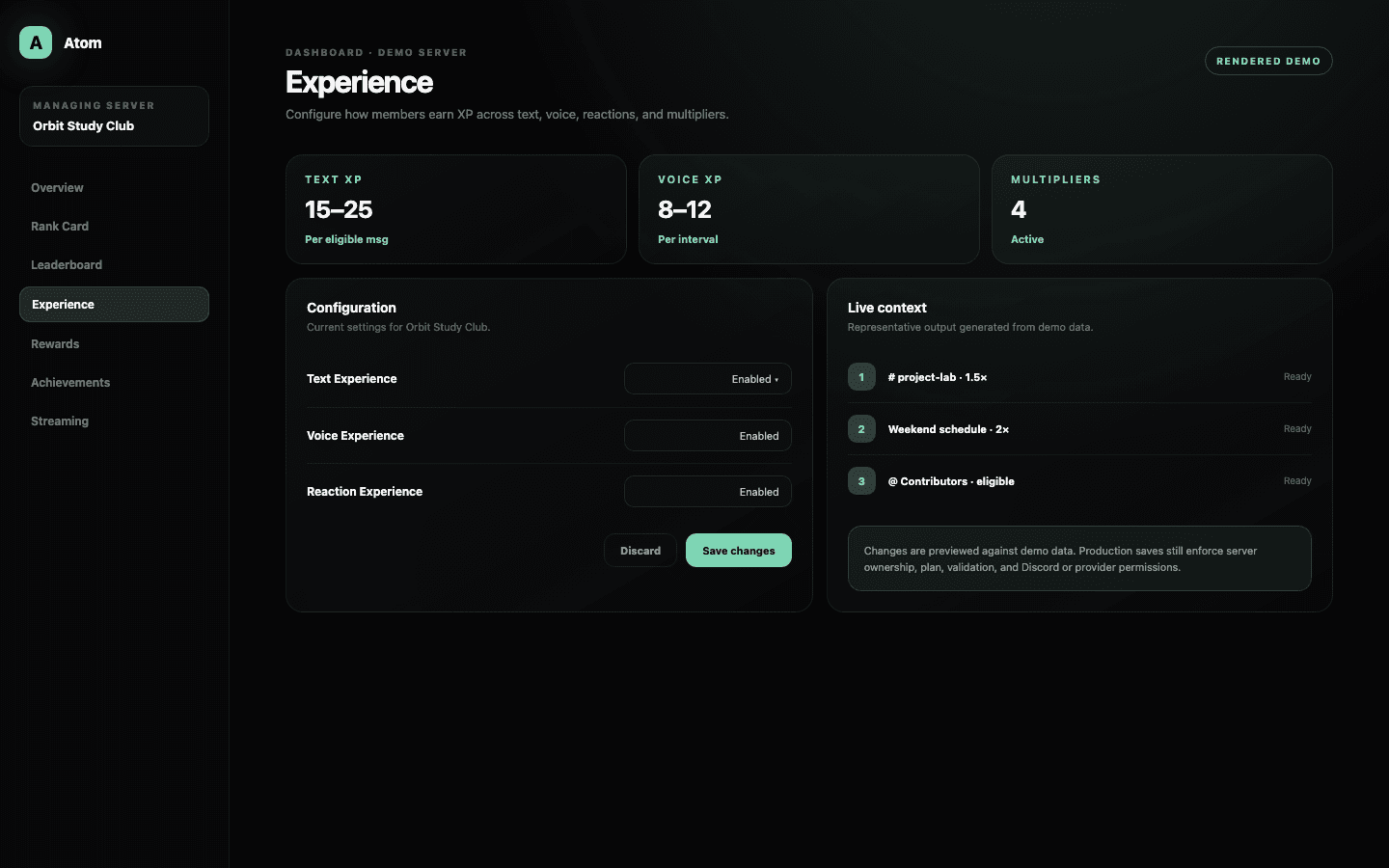
Atom Experience is the central editor for how members earn XP. It separates text, voice, and reaction activity, then connects those base rules with experience roles, channel multipliers, and multiplier schedules. Formula and Cooldown remain dedicated pages because they affect pacing across the wider system.
01
Text, voice, and reaction progression are separate policies with different abuse and pacing risks.
02
Roles, channels, and schedules modify eligibility or value around the base experience rules.
03
Publish the system members experience: range, cooldown, exclusions, and any temporary multipliers.
Text, voice, and reactions
Different participation deserves different rules.
Text messages are discrete and easy to count, which also makes them easy to farm. Voice participation measures time and needs protections around absence, muted behavior, or ineligible channels. Reactions are lightweight social signals whose meaning depends on whether Atom is measuring the person reacting, the person receiving, or both. The dashboard keeps these models separate so a safe text rule is not assumed to be a safe voice rule.
Start from the behavior the server wants to encourage, then set a conservative range. XP should acknowledge useful participation rather than pay for every available action. Blacklists and cooldowns shape eligibility, while the formula determines what accumulated XP means for future levels.
Context around the base rule
Use roles and multipliers to express policy, not favoritism by accident.
Experience roles can define how particular server roles participate in an activity model. Channel multipliers adjust the value of activity where the context genuinely differs—for example, a project help channel versus a high-volume off-topic feed. Each multiplier should have a written reason, because members will experience its effect even if they never open the dashboard.
Scheduled multipliers add time as another dimension. They are useful for a community weekend or planned event, but an old schedule can quietly distort progression long after its purpose is forgotten. Name the event, define the active days, and review the schedule after it ends.
- Establish the base rule before adding exceptions.
- Keep channel multipliers few enough to explain in one short policy.
- Give every temporary schedule an owner and an end-of-event review.
The full progression system
XP ranges only make sense beside cooldown and formula.
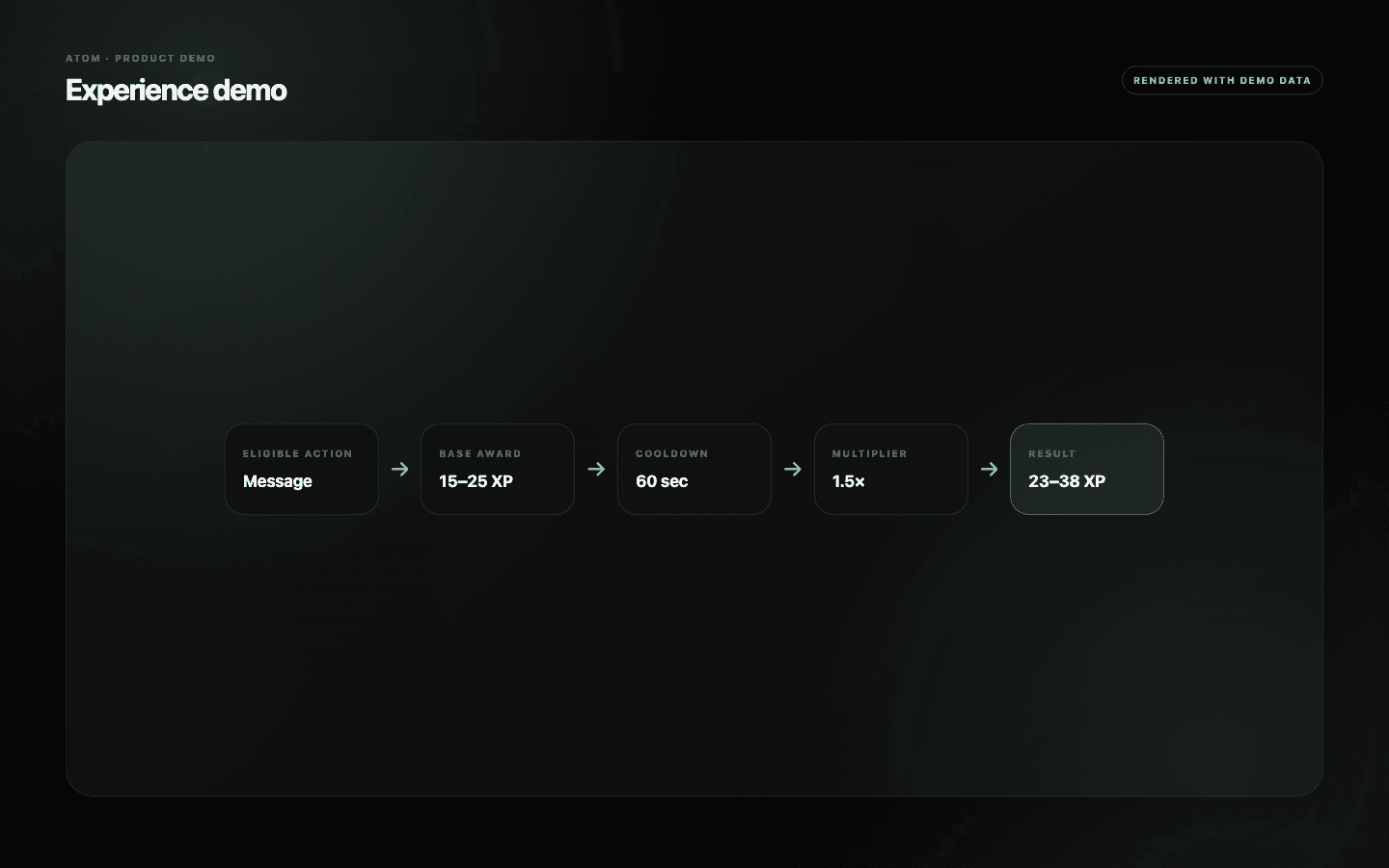
An average message award cannot be evaluated in isolation. A small award with no cooldown can grow faster than a larger award available once per minute. The formula then converts the accumulated XP into level requirements, so the same earning rate can feel generous at level 5 and slow at level 50.
Use Formula’s projection to understand the long-term curve and Cooldown’s quick reference to understand the short-term ceiling. Then compare the result with the reward ladder. Progression feels coherent when effort, level timing, and meaningful unlocks tell the same story.
A fair operating model
Explain the rule, observe it, and resist constant retuning.
Publish which activities can earn XP and which spaces or roles are excluded. You do not need to expose every anti-abuse detail, but members should understand the legitimate path to progression. Surprise multipliers and hidden exclusions weaken trust even when the arithmetic is correct.
After launch, use Overview and leaderboard movement to spot outliers. Investigate before tuning: a community event, role change, or new channel can explain a shift. When a rule changes, record the date and reason so later administrators can distinguish intentional policy from historical residue.
Common questions
What administrators ask before they switch it on.
Can text, voice, and reaction XP use different rules?
Yes. Atom exposes them as separate activity models because their pacing, context, and abuse risks differ.
Where do channel multipliers live?
Experience includes a channel-multiplier section, while multiplier schedules manage time-based activation.
Does Experience decide how much XP a level needs?
The Formula page controls the level curve. Experience controls how eligible activity contributes XP toward that curve.
How should I choose an XP range?
Start conservatively, account for cooldown and expected activity volume, project the formula, and observe a full representative period before increasing it.